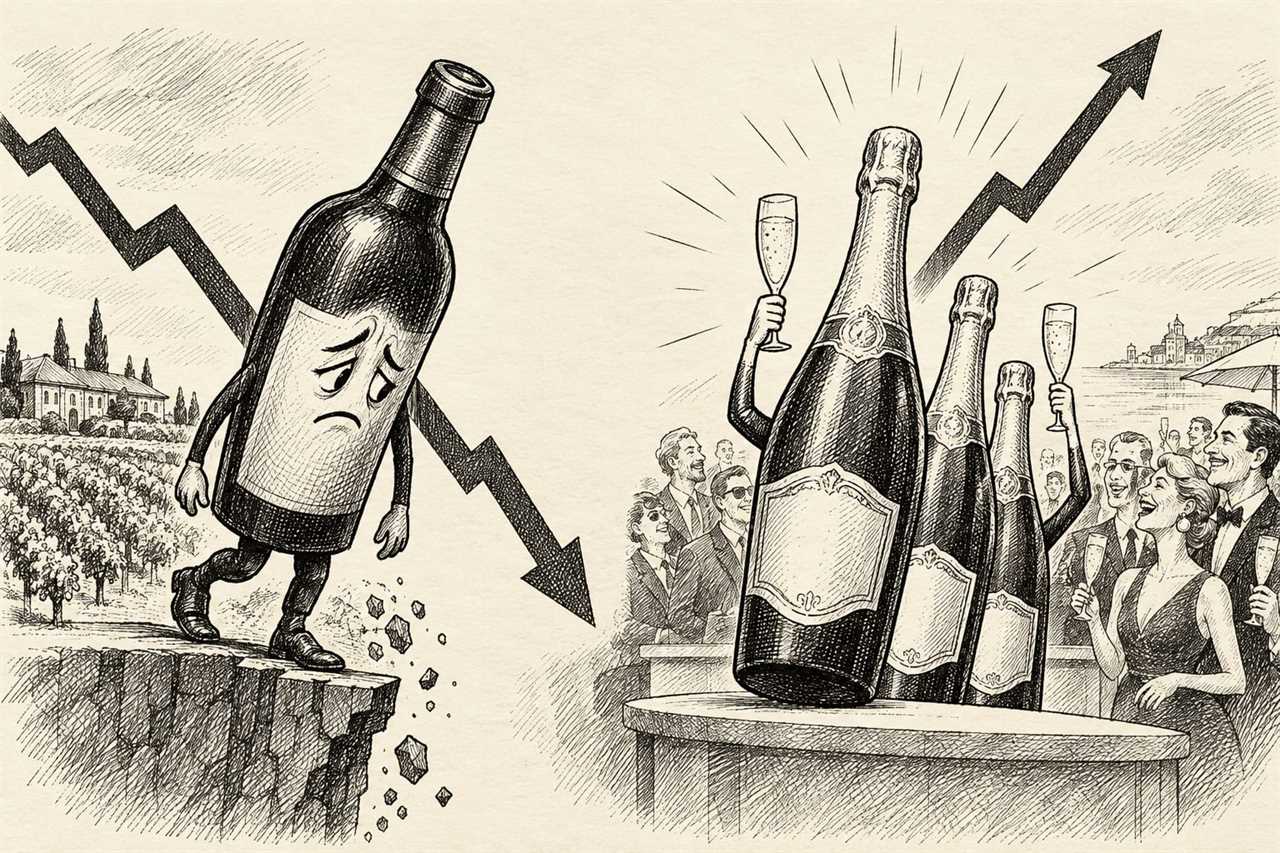
Brand Finance has published its Alcoholic Drinks 2026 report, showing Penfolds recorded the largest brand value decline among the world's top 10 Champagne and wine brands. The Australian wine brand's value fell 32 per cent to US$776 million. The report, which ranks leading beer, spirits and wine brands globally, found Champagne houses outperforming still wine brands overall.
For wine drinkers and industry watchers, the figures point to a widening gap between how consumers value sparkling wine occasions and everyday still wine. The report suggests shoppers are cutting back on wine purchases generally but remain willing to pay more for brands tied to celebrations, a shift that could shape pricing and marketing decisions across the industry in the coming year.
Veuve Clicquot, Dom Pérignon and Moët & Chandon posted the strongest growth among the 10 ranked brands. Moët & Chandon kept its spot as the most valuable Champagne and wine brand worldwide, with its value rising 12 per cent to US$2.3 billion. The brand scored 80.3 out of 100 on Brand Finance's Brand Strength Index, earning an AAA- rating.
Veuve Clicquot was the fastest-growing brand in the report. Its value climbed 39 per cent to US$1.4 billion, moving it from fourth place in 2025 to second this year. Dom Pérignon's value rose 21 per cent to US$300 million, placing it ninth overall.
Four of the six still wine brands in the ranking lost value. Penfolds posted the steepest fall, followed by Chinese brand Changyu, which dropped 22 per cent to US$641 million. Yellow Tail's value fell 14 per cent, and Beringer's fell 16 per cent.
Henry Farr, Brand Finance's Global Sector Head of Alcoholic Drinks, said the results point to the growing importance of premium positioning. "Consumers are drinking less wine but they are still willing to spend on brands that represent meaningful occasions," Farr said. "The success of Moët & Chandon, Veuve Clicquot and Dom Pérignon shows that strong brands can outperform their categories when they command premium perceptions and emotional relevance. Meanwhile, declines for brands such as Penfolds and Changyu reflect the broader pressures facing still wine, where changing consumption patterns are making growth harder to achieve."
Brand Finance said Champagne houses have managed to hold their brand value even as shipment volumes come under pressure, pointing to their heritage, luxury positioning and ties to celebrations as reasons why.
Not every still wine brand struggled. Barefoot was named the strongest Champagne and wine brand in the 2026 report, with a Brand Strength Index score of 85.1 and an AAA rating. Its brand value grew two per cent to US$1.3 billion. Carlo Rossi also grew, up eight per cent to US$313 million. Brand Finance said these results show that accessible, familiar wine brands can still grow through availability and affordability even when the wider market is under pressure.
The declines line up with wider data on wine consumption. The International Organisation of Vine and Wine reported global wine consumption fell almost three per cent in 2025, to 208 million hectolitres.
Brand Finance's Alcoholic Drinks 2026 report covers the top 50 beer brands, the top 50 spirits brands and the top 10 Champagne and wine brands worldwide. Brand value in the report is defined as the estimated economic benefit a brand owner could gain by licensing its brand on the open market, which differs from the value of the business itself or its sales revenue.
A staff reporter for this site has been following the report's findings as they relate to wine drinkers and the trade, aiming to lay out the figures accurately while the data is still fresh and relevant to readers tracking the industry's direction.
Brand Finance did not indicate when its next Alcoholic Drinks report will be published.
Earlier in this series: Pinot Noir's Fragile Grape Faces a Pricing Crossroads