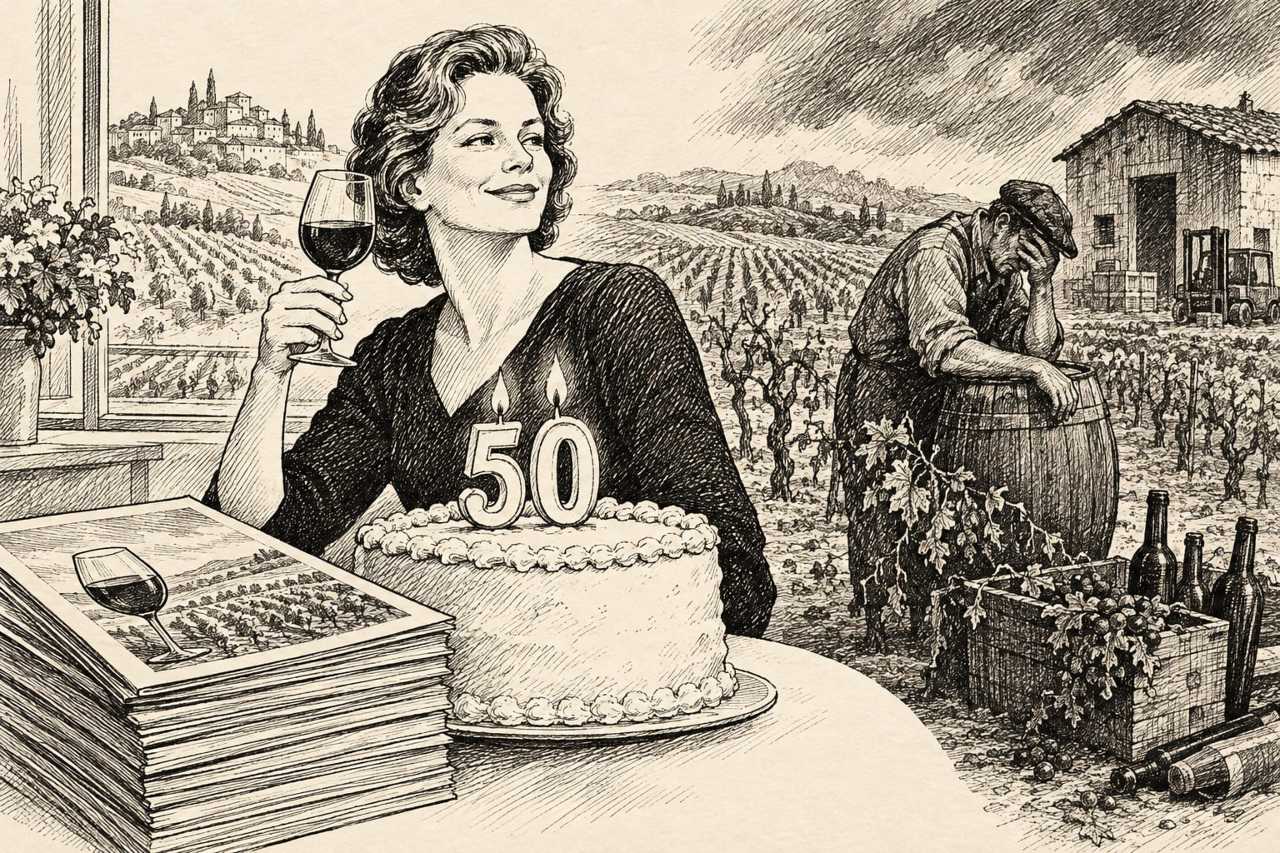
Wine Spectator published an essay this week marking the magazine's 50th anniversary, written by executive editor Jeffery Lindenmuth. The piece reflects on five decades of coverage even as U.S. wine consumption has fallen for five straight years and major producers have cut jobs.
For wine drinkers and industry workers, the essay offers a reminder that current struggles are not new to wine's long history. A staff reporter for this site, who follows the wine trade for its regular readers, reviewed the essay to separate the publication's historical claims from the current business downturn it describes.
Lindenmuth writes that he became executive editor in the summer of 2020, during the COVID-19 lockdown, after longtime executive editor Thomas Matthews retired. He says Wine Spectator founder Marvin R. Shanken offered him the role by phone, telling him beforehand, "Are you sitting down?" Shanken reportedly told him, "A lot of people are going to be very shocked." At the time, the magazine's New York and Napa offices were largely empty, with editors conducting blind tastings from their kitchen tables.
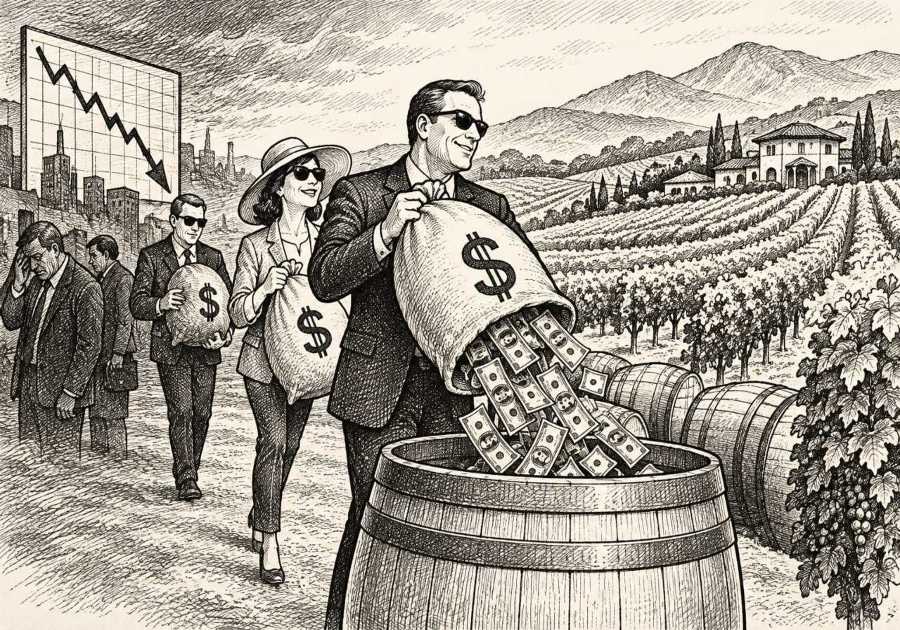
According to the essay, U.S. wine consumption hit a modern record of 344.1 million cases in 2020, as people drank more at home during the pandemic, based on figures from sister publication Impact Databank. Consumption has declined every year since, dropping to 309 million cases in 2025, a decline of more than 10 percent from the peak. Lindenmuth writes that U.S. wine revenue fell by more than $1 billion in 2025 alone, and that companies including Jackson Family Wines and E. & J. Gallo eliminated hundreds of jobs.
Lindenmuth states that the magazine has covered these difficulties directly rather than avoiding them, citing a July 31, 2021, cover story on cannabis's rise in California wine country and its friction with wineries. He says Wine Spectator has also reported on climate change and wildfires in Napa Valley, Washington state and Europe, along with tariffs, shifting consumer habits and the growth of no-alcohol "wines."
At the same time, Lindenmuth points to the magazine's Top 100 list as evidence of wine's continued vitality. He cites a study by Omer Gokcekus, published in the Journal of Wine Economics in 2026, titled "A structural break analysis of Wine Spectator's Top 100, 1988-2025." Gokcekus concludes that the Top 100 now reflects "a mature, globally diversified" list "in which no single country bloc dominates, quality remains stable, and real prices are lower than at any earlier stage in the 38-year record."
Lindenmuth places today's downturn in a longer historical frame. He notes that phylloxera destroyed an estimated 40 percent of France's vines between 1863 and 1890, and that U.S. Prohibition eliminated the wine trade starting in 1920. He also notes that much of what defines modern wine culture is relatively recent: glass bottles date to the 17th and 18th centuries, Bordeaux's classification was set in 1855, and California's fine wine reputation only reached global prominence around 50 years ago, roughly when Wine Spectator launched.
The essay includes remarks from interviews Shanken conducted starting in 2023 with five wine industry figures. Piero Antinori, whose family has made wine in Italy for more than six centuries, spoke about acquiring Stag's Leap Wine Cellars in Napa Valley. Angelo Gaja, 83, told Shanken he had instructed his three children to "keep their eyes and ears open for future opportunities." Chuck Wagner, founder of Caymus Vineyards, recalled his father saying, "with one bottle of wine, four strangers can become friends," adding, "I think that's still true."
Lindenmuth writes that California's wine industry alone is worth more than $85 billion, and that public attention to its financial struggles can amplify concern about wine's future. He argues that the business of wine and the role wine plays in people's lives are separate matters, writing that "wine the business will change" but that wine "as part of human experience will endure."
The essay closes by noting Wine Spectator's broader anniversary coverage, which includes material on the magazine's history, essays from its senior editors, and a feature marking 45 years of its New York Wine Experience event. The magazine says readers can find that coverage alongside the anniversary essay on its website.
Catch up on our earlier post: $150 Wines Now Sell For $30 At Costco