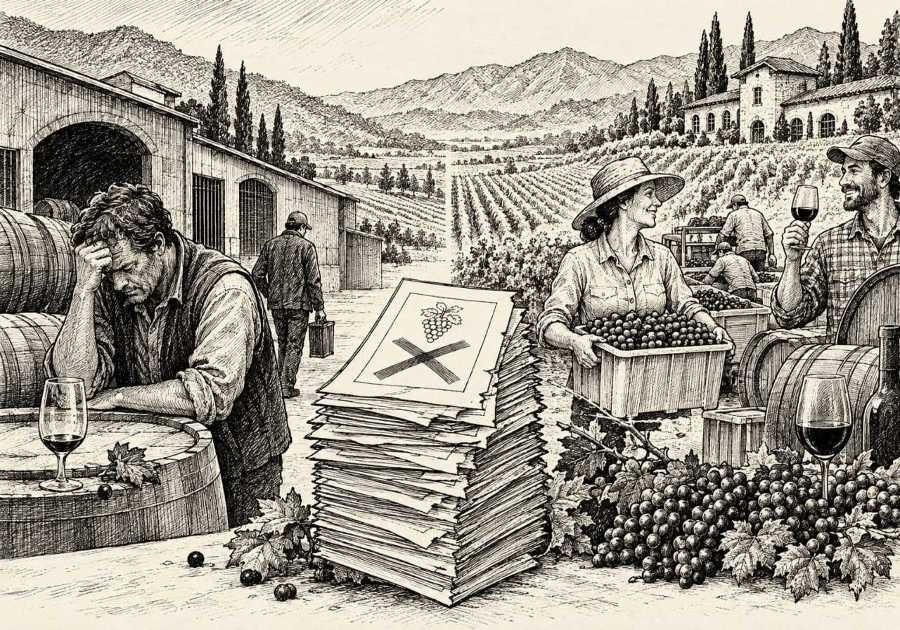
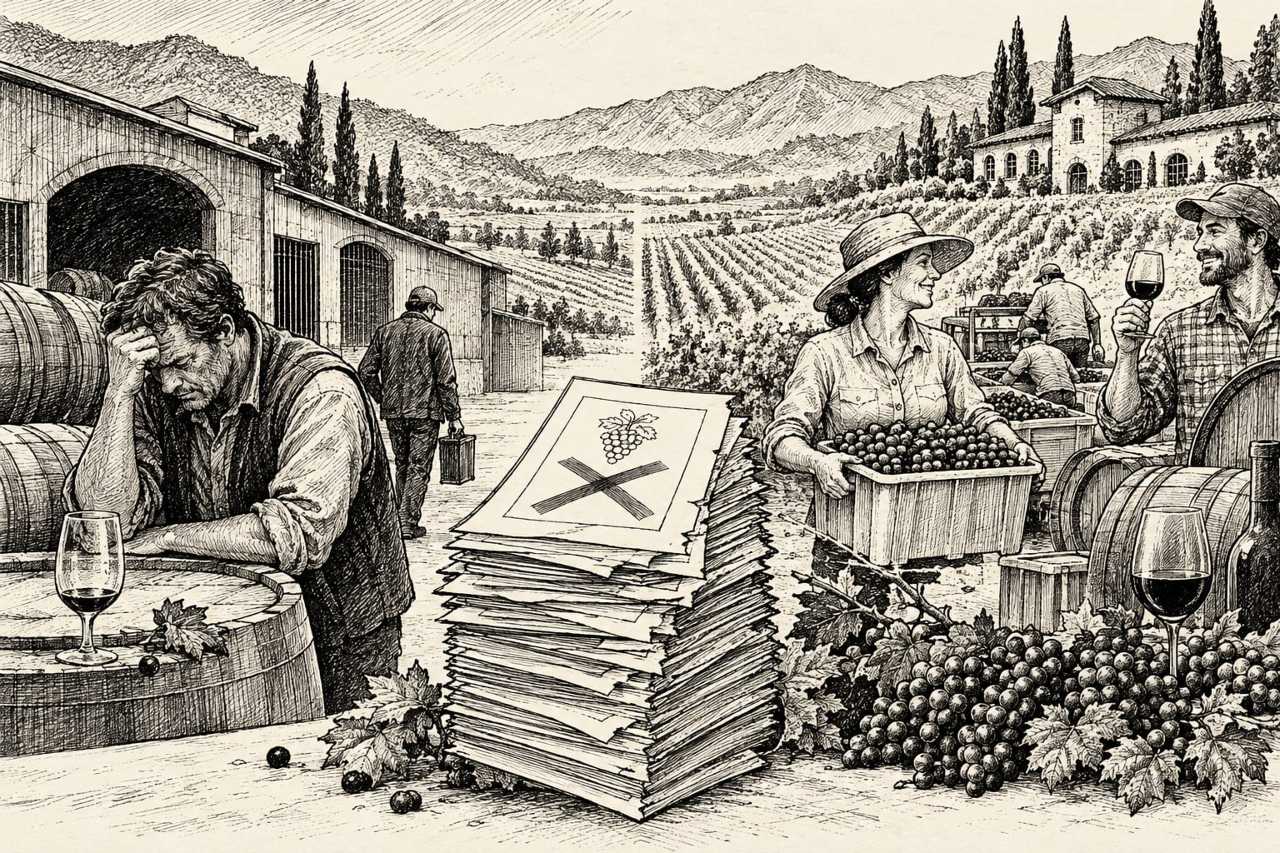
Napa County lost 65 winery licenses in the week ending Oct. 12, according to Napa Valley Features, a local publication that tracks the region's wine business. The drop marks the third consecutive October decline and leaves the county's winery license count 180 below its 2025 peak.
The licenses are a basic measure of how many wineries are actively operating in Napa County at a given time. A drop of this size signals that a meaningful number of producers have stopped operations, let permits lapse, or closed outright. For readers who live in or depend on the Napa Valley economy, from vineyard workers to restaurant owners to tourism businesses, the trend offers an early read on how the local wine industry is holding up as the year's harvest wraps up.
According to the report, most of the licenses that lapsed belonged to brands founded since 2020. That detail points to newer, smaller producers bearing the brunt of this year's shakeout rather than established wineries with longer track records and deeper financial reserves. Newer brands often operate with thinner margins and less cushion to absorb a difficult year, which may help explain why they account for most of the recent losses.
The license losses come during a harvest season that has produced sharply different outcomes depending on where a business sits in the supply chain. The crop itself was short this year, meaning growers had less fruit available to sell. At the same time, the costs of running a vineyard did not shrink to match the smaller harvest. Growers faced the same expenses for labor, equipment and land while bringing in less fruit to sell against those costs.
Other pressures compounded the squeeze. The report cites rising fuel costs, ongoing vine disease problems, and a decline in overseas visitors as additional factors weighing on the region's wine businesses this year. Fewer international tourists can mean less revenue for tasting rooms and wineries that rely on visitor traffic as part of their business model, separate from wholesale and distribution sales.
Yet the picture is not uniformly bleak. Napa Valley Features reports that one winery owner has called this year's short crop a "godsend." The characterization reflects a basic economic reality: a smaller harvest can reduce the oversupply of grapes that has weighed on prices in recent years. Less fruit on the market can support better pricing for growers who do have grapes to sell, even as the overall volume available is lower.
The publication notes that cheaper fruit lowers what it costs to produce a bottle of wine. But, as the report states plainly, lower production costs do not create a buyer for the finished product. That distinction underscores a deeper challenge facing the industry beyond this year's harvest: producing wine more cheaply does not solve the question of whether there is enough demand to sell it.
Napa Valley Features, which published the figures as part of its subscriber series "Under the Hood," has been tracking license data and other indicators through what it describes as a local economic dashboard. The publication is now in its fourth year of operation and says it depends on paid subscriptions to fund its local reporting. It also says it is building new tools and resources through a related project called NapaServe.org.
A staff reporter for this site has been following Napa County's wine industry closely this harvest season, working to confirm figures like the license counts and verify details before they are published. The goal, as always, is to get the numbers right and get the story to local readers while the information still matters to the decisions they are making about their businesses and livelihoods.
Napa Valley Features indicates it will continue to track winery license counts and related economic indicators in future installments of its "Under the Hood" series, along with results from its reader polls. No specific date for the next update was given in the material reviewed.
Before this, we covered: US wine exporter says tariffs wiped out business ‘overnight’