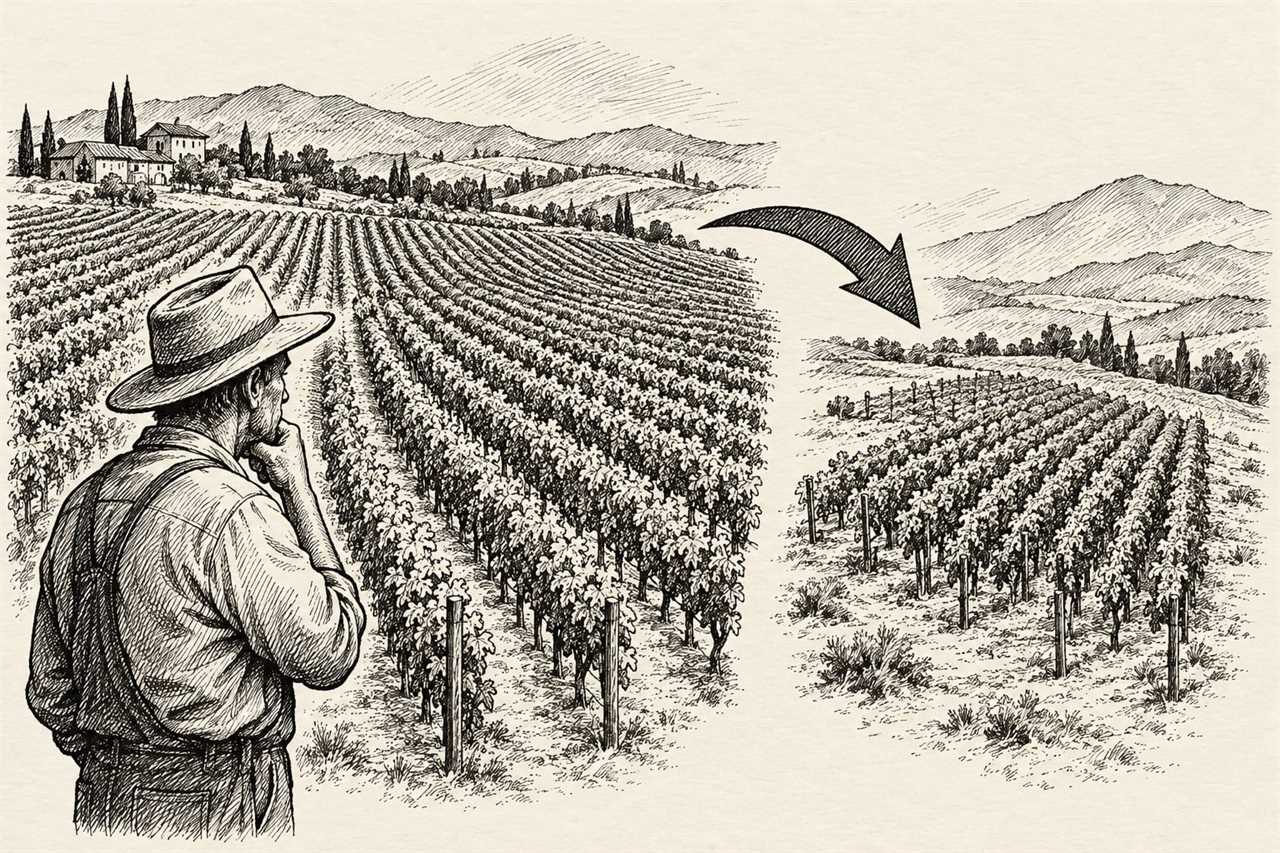
California has lost almost 10% of its vineyard acreage over the past year, according to a report published by The Drinks Business. The figures mark one of the steepest single-year declines recorded in the state's wine-growing history. California accounts for the large majority of wine produced in the United States, making the drop a significant shift for the country's wine industry.
The decline matters to wine drinkers and industry workers alike. California wine fills grocery store shelves and restaurant lists across the country and much of the world. A sharp reduction in planted acreage can reshape what grape varieties are available, how much wine costs and how many jobs the industry supports in rural communities that depend on grape growing and winemaking.
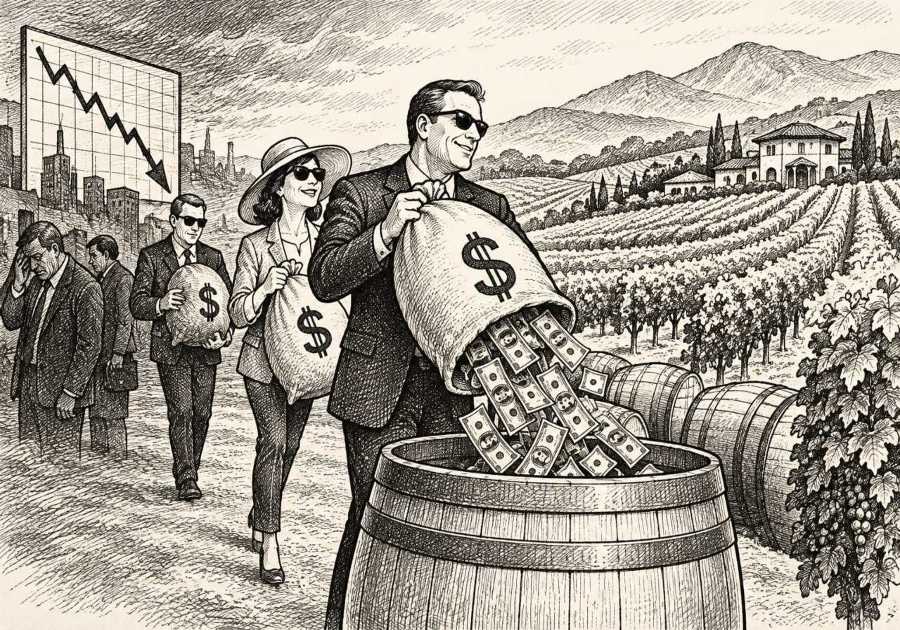
The Drinks Business report does not give a single cause for the loss, but the decline fits a pattern that has built over several years. California growers have faced a mix of pressures: an oversupply of wine grapes following years of heavy planting, falling demand for wine among younger consumers, and the rising cost of water, labor and land. Many of these pressures have pushed growers to pull out vines rather than replant them once a block reaches the end of its productive life.
Vine removal, sometimes called a "vine pull," has become more common across California's wine regions in recent seasons. Growers facing low grape prices or expiring contracts with wineries have chosen to take land out of wine production rather than keep farming vineyards at a loss. Some of that land has been converted to other crops such as almonds or left fallow. Other acreage has simply gone unreplanted after vines were removed due to age, disease or drought stress.
Water availability has also weighed on growers. California has cycled through periods of severe drought over the past decade, and water restrictions in some growing regions have made it harder to justify replanting vineyards that require consistent irrigation. Wildfires have added further strain in certain years, damaging vines directly or tainting grapes with smoke before harvest.
On the demand side, wine consumption in the United States has softened in recent years as some consumers shift toward spirits, ready-to-drink cocktails or non-alcoholic alternatives. That softer demand has left wineries with less incentive to buy as many grapes, which in turn has reduced the price growers can get for their fruit. When grape prices fall below the cost of farming a vineyard, growers often have little reason to keep vines in the ground.
The Drinks Business report frames the nearly 10% drop as a marker of how fast these pressures have moved through the industry in a single year. The publication, a trade outlet that tracks the global drinks business, did not specify which counties or grape varieties saw the steepest losses, nor did it break down how much of the lost acreage has been converted to other uses versus left idle.
A staff reporter for this site has been following the story as it develops, with an eye on keeping the figures accurate and getting the information to readers while it is still relevant to decisions they may be weighing, whether that is a grower assessing next season's planting or a consumer wondering why certain California wines may become harder to find or more expensive.
The report does not indicate whether the pace of vineyard loss is expected to continue, slow or reverse in the coming year. Industry figures tracking vineyard acreage typically update annually, so a clearer picture of whether this marks a one-year dip or the start of a longer trend may not emerge until the next round of data is published. For now, the scale of the decline stands as a signal of how much pressure California's wine industry has absorbed over a short period, and how that pressure is showing up directly in the amount of land growers are willing to keep in vines.
See also our earlier piece: Penfolds Brand Value Drops 32 Per Cent as Champagne Brands Gain