
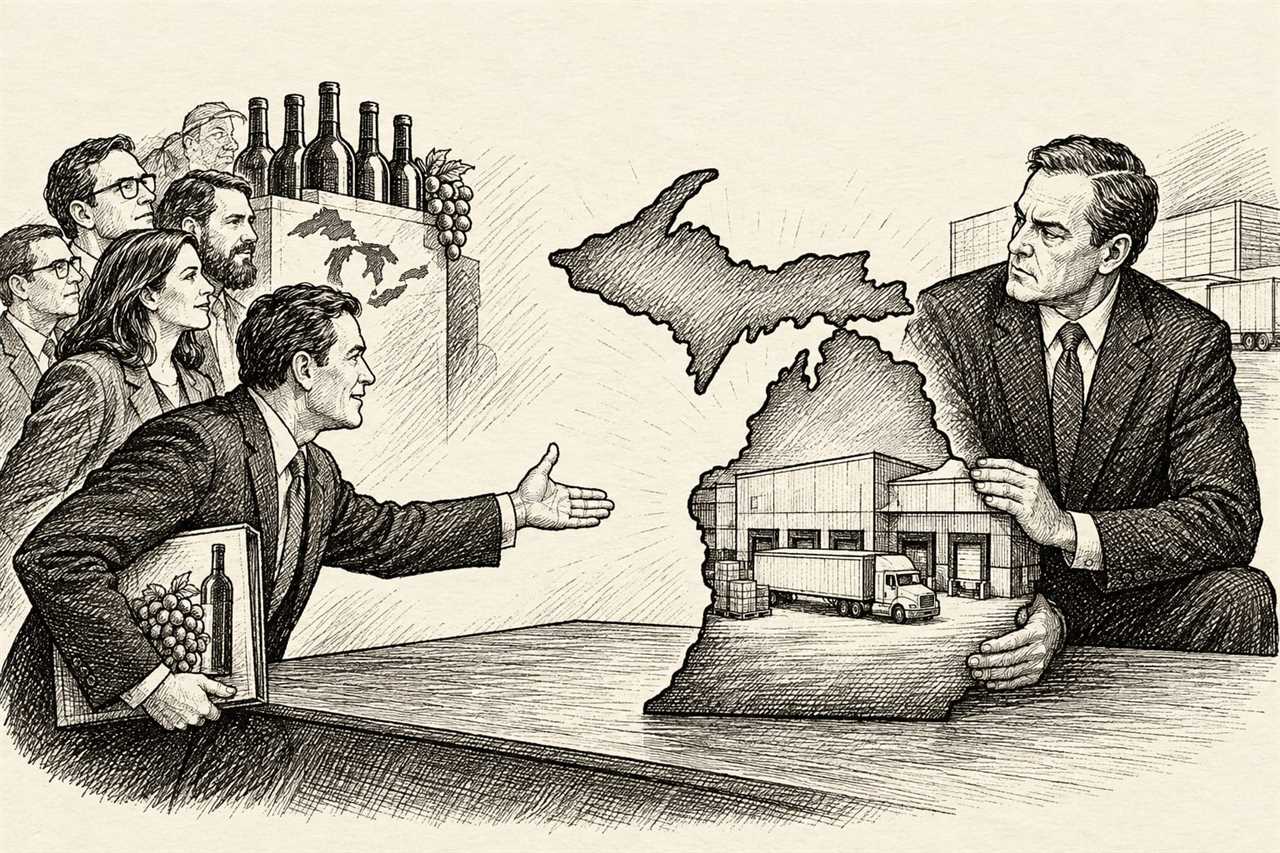
Great Lakes Wine and Spirits is among several companies seeking to purchase the Michigan operations of Republic National Distributing Company, according to a report from DBusiness Magazine. The Detroit business publication reported that multiple parties have expressed interest in acquiring RNDC's presence in the state, though a final buyer has not been named.
The outcome matters to Michigan retailers, bars, restaurants and consumers because RNDC is one of the largest wine and spirits distributors operating in the state. Under Michigan's three-tier alcohol distribution system, producers must sell through licensed wholesalers before products reach store shelves or restaurant menus. A change in ownership of a distributor this size can affect which brands are available, how quickly orders are filled and what relationships retailers maintain with sales representatives.
Republic National Distributing Company is a national distributor of wine and spirits with operations across multiple states. The company works with producers to bring products to market through licensed wholesale channels, a role required in states like Michigan that regulate alcohol sales through a tiered system separating producers, distributors and retailers.
Great Lakes Wine and Spirits is a longtime Michigan-based distributor with roots in the Detroit area. The company has operated for decades within the state's wine and spirits trade, building relationships with retailers and restaurants across Michigan. Its interest in acquiring RNDC's Michigan business would expand its footprint in a market it already knows well.
DBusiness Magazine did not report a purchase price, a timeline for a deal or the identities of the other interested parties beyond Great Lakes Wine. The magazine's report also did not specify what prompted RNDC to consider selling its Michigan operations or whether the move is part of a broader restructuring by the national distributor.
A staff reporter for this site has been following developments in Michigan's beverage distribution industry and is working to confirm additional details as they become available. The reporter's focus remains on verifying facts before publication, given the stakes for Michigan businesses that depend on a stable distribution network for wine and spirits.
Any sale of a major distributor's operations in Michigan would likely require review under state liquor licensing rules. The Michigan Liquor Control Commission oversees licensing for distributors, retailers and other participants in the alcohol trade, and changes in ownership of a distribution business typically require commission approval before a new entity can begin operating under an existing license or a new one.
Industry consolidation among alcohol distributors has been a recurring theme nationally in recent years, as companies seek scale to compete for shelf space and negotiate terms with large producers. A sale of RNDC's Michigan business to a local player like Great Lakes Wine would run counter to that broader trend, keeping distribution in the hands of a company with long-standing ties to the state rather than a national or multi-state operator.
For Michigan retailers and restaurant owners, the identity of the eventual buyer could influence which brands remain readily available and how pricing and delivery schedules are handled going forward. Distributors often hold exclusive or near-exclusive rights to sell certain brands within a given territory, so a change in ownership can shift which company handles orders for specific wines or spirits.
DBusiness Magazine's report did not indicate when a decision on the sale might be reached or whether RNDC has set a deadline for bids. It also did not say whether the company plans to exit Michigan entirely or retain some presence in the state under new ownership arrangements.
This site will continue to follow the story and report additional details as they emerge, including the identity of any buyer, terms of a potential sale and reaction from retailers and industry groups in Michigan. Readers with ties to the state's wine and spirits trade can expect updates as regulatory filings or company statements provide more clarity on the transaction.
Read our previous article: Oregon Wine Industry Closes 110 Vineyards Amid Sales Slump