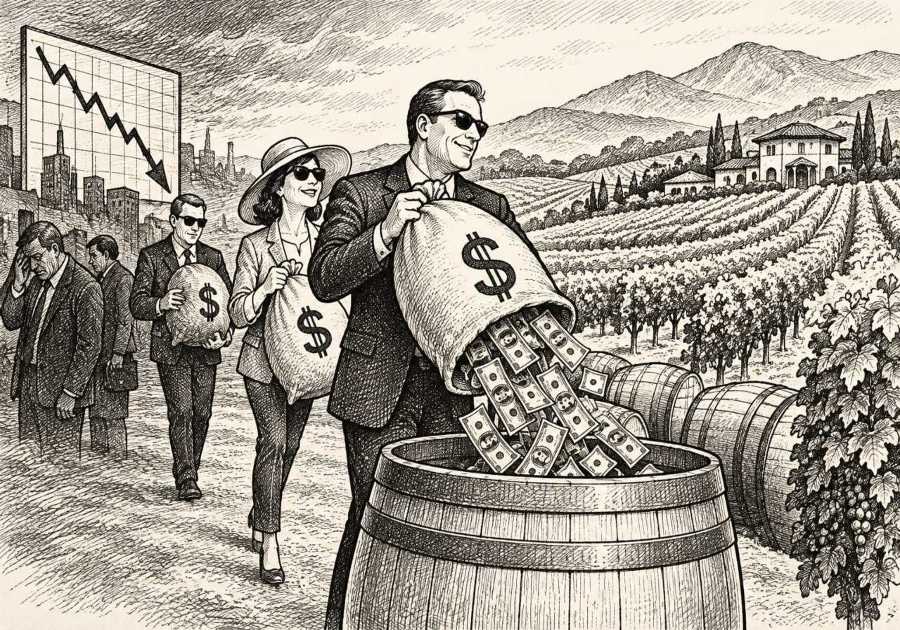
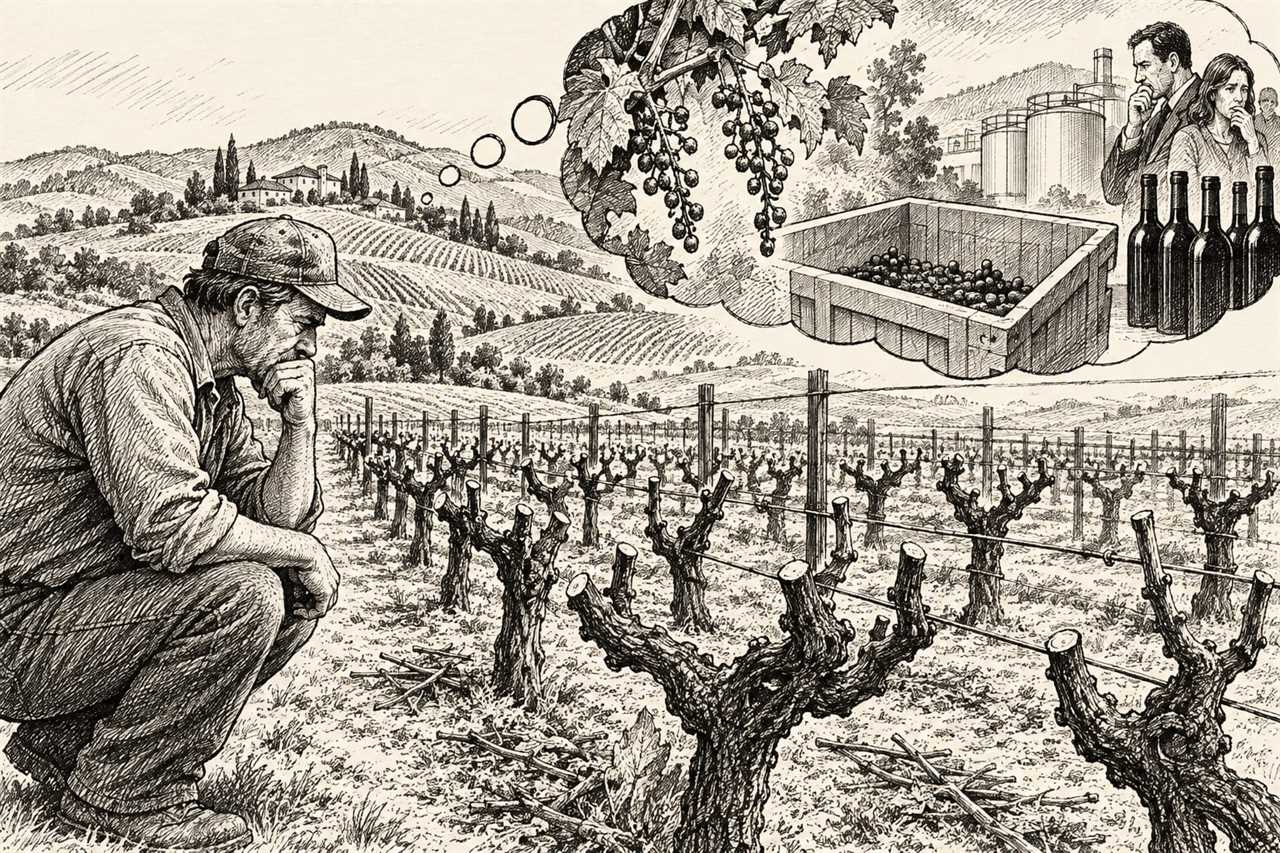
California growers removed more than 38,000 acres of vineyard land between October 2024 and August 2025, according to the state's 2025 acreage study. Industry estimates reported by the San Francisco Chronicle on Monday say another 40,000 acres could be pulled out before the end of 2026, raising a new question for the state's wine industry: whether years of cutting back on oversupply could leave California without enough grapes if demand picks back up.
The shift matters to growers, winery executives and anyone who buys California wine. For several years, the industry's main problem was too many grapes and too much wine sitting in storage with no buyers. That led to large-scale vine removals as farmers decided unproductive acreage no longer made financial sense. Now some in the industry are asking whether that correction has gone far enough to risk the opposite problem: not enough vineyard land to meet demand once it recovers. Because vineyards take years to replant and reach full production, a wrong turn in either direction is costly and slow to fix.
The numbers at the center of the debate are stark. California had roughly 477,000 acres of vineyard land as of August 2025. If the additional 40,000 acres estimated for removal by the end of 2026 are in fact taken out, the state's total would fall to about 437,000 acres. Some in the industry say the state needs around 425,000 acres to match current demand. That would leave California only about 12,000 acres above that line, a thin cushion if the estimates hold.
Not everyone agrees on where that line sits. Peter Ekman, chief executive of Spring Mountain Vineyard, argues in a new industry analysis that California could fall below the 425,000-acre mark and tip into shortage. His conclusion, as reported by the Chronicle, rests on how fast vines are being removed and how long it would take to plant and bring new vineyards into production if consumer demand strengthens.
Jeff Bitter, president of Allied Grape Growers, offered a different view. He told the Chronicle the market may need fewer than 400,000 acres to reach balance, about 25,000 acres below the figure Ekman cites. If Bitter is right, California could still have more than enough vineyard land for current sales even after another round of removals.
The disagreement is not simply academic. Acreage levels are one of the clearest indicators of how deeply the industry is still adjusting after years of weak wine demand. California remains the largest wine-producing state in the country, and vine removal decisions ripple through farm incomes, winery planning and local economies in major grape-growing regions.
The figures also come with caveats. The 38,000-acre reduction is based on an official state study, but the additional 40,000-acre estimate for 2026 has not been confirmed through a formal count. Part of the shortage argument also draws on a business memorandum that has not been fully published. That makes the warning more of an emerging industry debate than a settled fact about statewide supply.
Wine already sitting in storage adds another layer of uncertainty. Stockpiles built up during the oversupply years could let wineries keep meeting sales for some time even as planted acreage falls, delaying any visible shortage. Growers also note that replanting is not quick. A new vineyard takes time and money before it produces a full commercial crop, meaning that if demand does rebound, the supply side may be slow to respond.
For now, the debate centers on where the balance point actually lies. Ekman puts it near 425,000 acres. Bitter puts it below 400,000. Until more complete acreage and inventory data are available, the industry is left without a clear answer.
A staff reporter for this site has been following California's vineyard adjustments closely, working to confirm the figures from state and industry sources as the story develops. The aim is to keep readers who depend on the wine trade informed while the numbers are still being debated.
What happens next depends on how much of the estimated 40,000-acre reduction is actually carried out by the end of 2026, and whether updated state acreage figures confirm or challenge the current projections.
This is our first article on this topic — there is more at Uncorked News