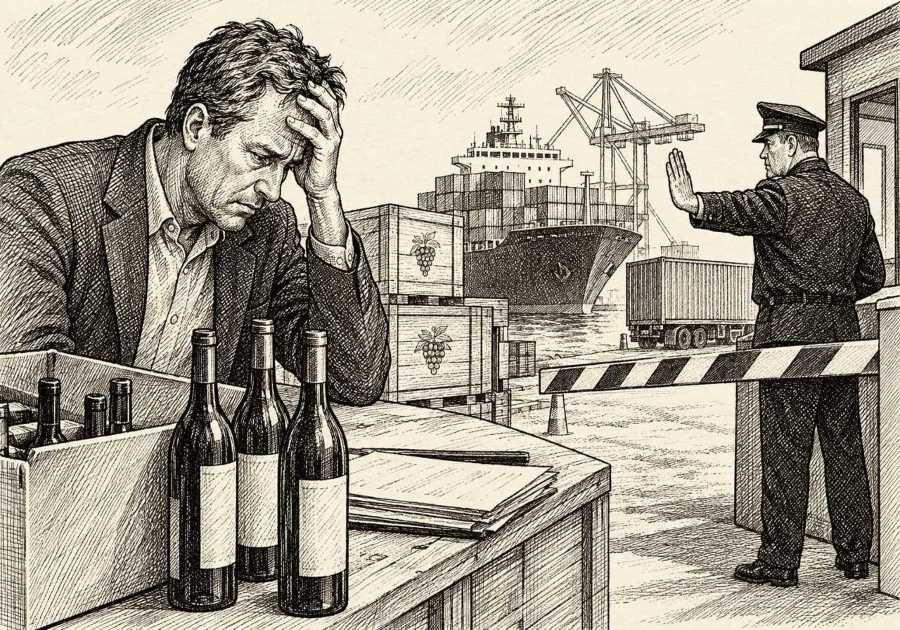
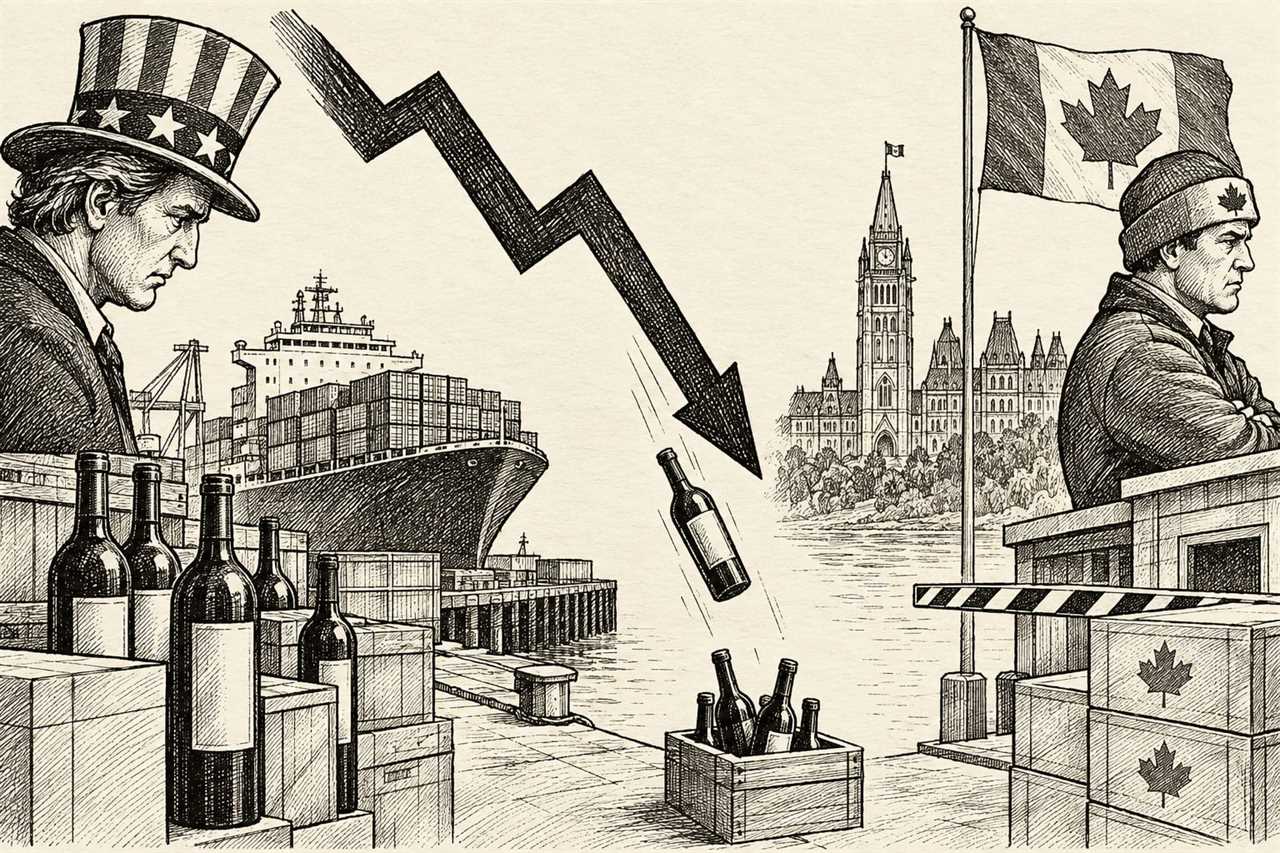
California wine producers say a trade dispute between the United States and Canada is keeping most American wine off Canadian shelves, cutting sharply into what had been the largest foreign market for U.S. wine. The restrictions have been in place for about a year and a half, following a breakdown in trade relations between the two countries.
The drop matters to consumers and workers tied to the wine industry because Canada had long been the biggest overseas buyer of American wine. When a major market closes, wineries lose sales built up over decades, and that can affect jobs, pricing and the availability of certain bottles both in Canada and in the United States.
According to the Wine Institute, U.S. wine exports to Canada fell 78%, from about $460 million in 2024 to $103 million in 2025. California makes up more than 95% of all U.S. wine exports, leaving the state especially exposed to the dispute. California's agriculture department had previously listed Canada as the top destination for the state's wine before the restrictions took hold.
Joan Kautz, of Kautz Wine, said her winery exports roughly 150,000 cases a year and had relied on Canada as a key outlet. She said most American alcohol products remain blocked from sale across Canada, with exceptions in Alberta and Saskatchewan, where U.S. wine has been allowed back onto shelves. Even in those two provinces, she said, competition for shelf space is already heavy.
"You can't replace Canada," Kautz said. She said wineries spent decades building relationships with Canadian buyers and that no other export market offers the same scale or value.
Kautz said her company has looked into other markets, including parts of Africa and Eastern Europe, but described those efforts as early steps rather than substitutes for what Canada provided.
President Donald Trump recently called Canada difficult to deal with, signaling no quick resolution to the broader trade tension. The White House has also pointed to other effects of the dispute, saying U.S. vehicle exports to Canada fell about 22% from April 2025 through March of this year compared with the same period the year before.
Economist Ina Simonovska, of the University of California, Davis, said the losses for wine producers may not end once trade barriers come down. She said Canada is doing what many countries do when a trade relationship becomes uncertain: building ties elsewhere. She described this shift as a form of "friend shoring" that could leave American businesses struggling to win back customers even after formal restrictions are lifted.
Stuart Spencer, of the Lodi Wine Commission, raised a similar concern. He said that even a full reopening of the Canadian market would not bring an immediate return to earlier sales levels. He said the dispute has already damaged the standing of U.S. products among Canadian buyers and given competing wines more space on store shelves.
Spencer said retailers and distributors do not typically change their inventories quickly, and once they find new suppliers, those arrangements often continue long after a dispute ends. That makes replacing lost shelf space a slow process, not an automatic one.
The stakes are higher for midsize and premium wineries that built years of business around the Canadian market. If Canadian retailers continue shifting toward other countries' wines, the losses for California producers could stretch beyond a year or two of weak sales and push wineries to rethink where they focus future export efforts.
Kautz said her company is staying in regular contact with its Canadian partners while the dispute continues. She said the winery is maintaining those relationships rather than stepping away, in hopes that access will improve and trade can resume on more stable terms.
For now, most U.S. wine remains shut out of Canadian stores, with only Alberta and Saskatchewan allowing limited sales. Kautz said Canada will stay important to her company no matter how long the dispute lasts, and that she hopes relations between the two countries improve enough to bring American wine back into regular distribution. The source material does not indicate a timeline for when that might happen.