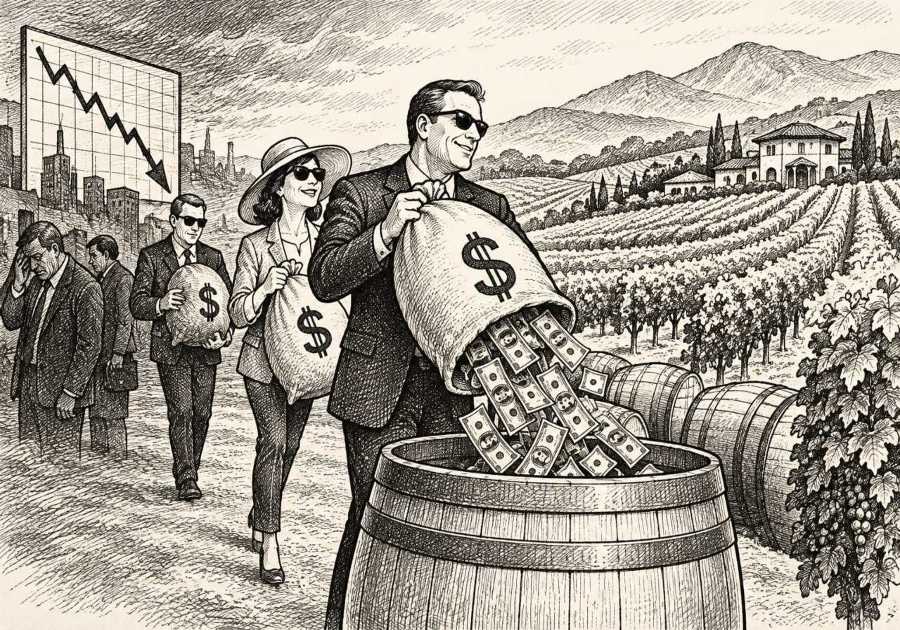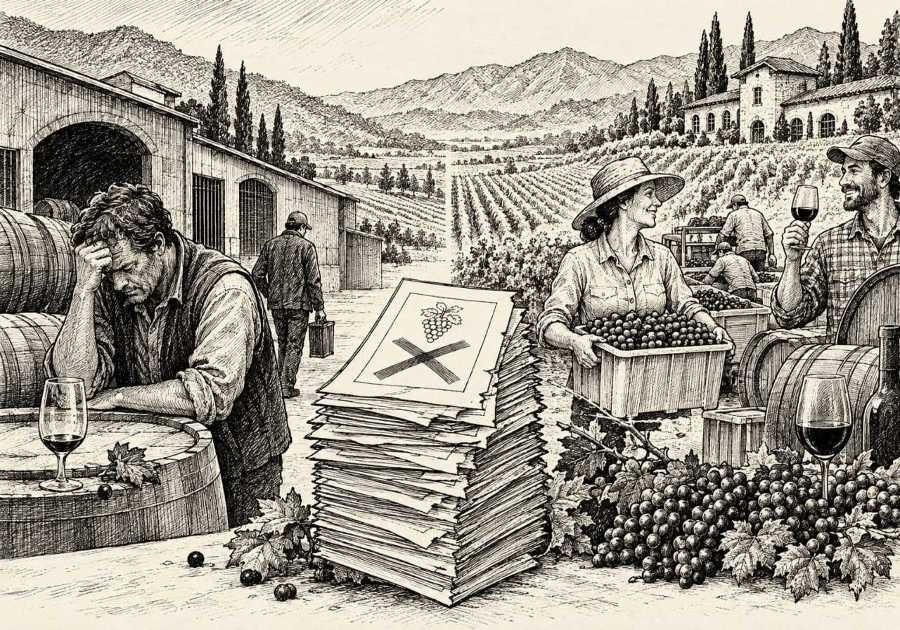
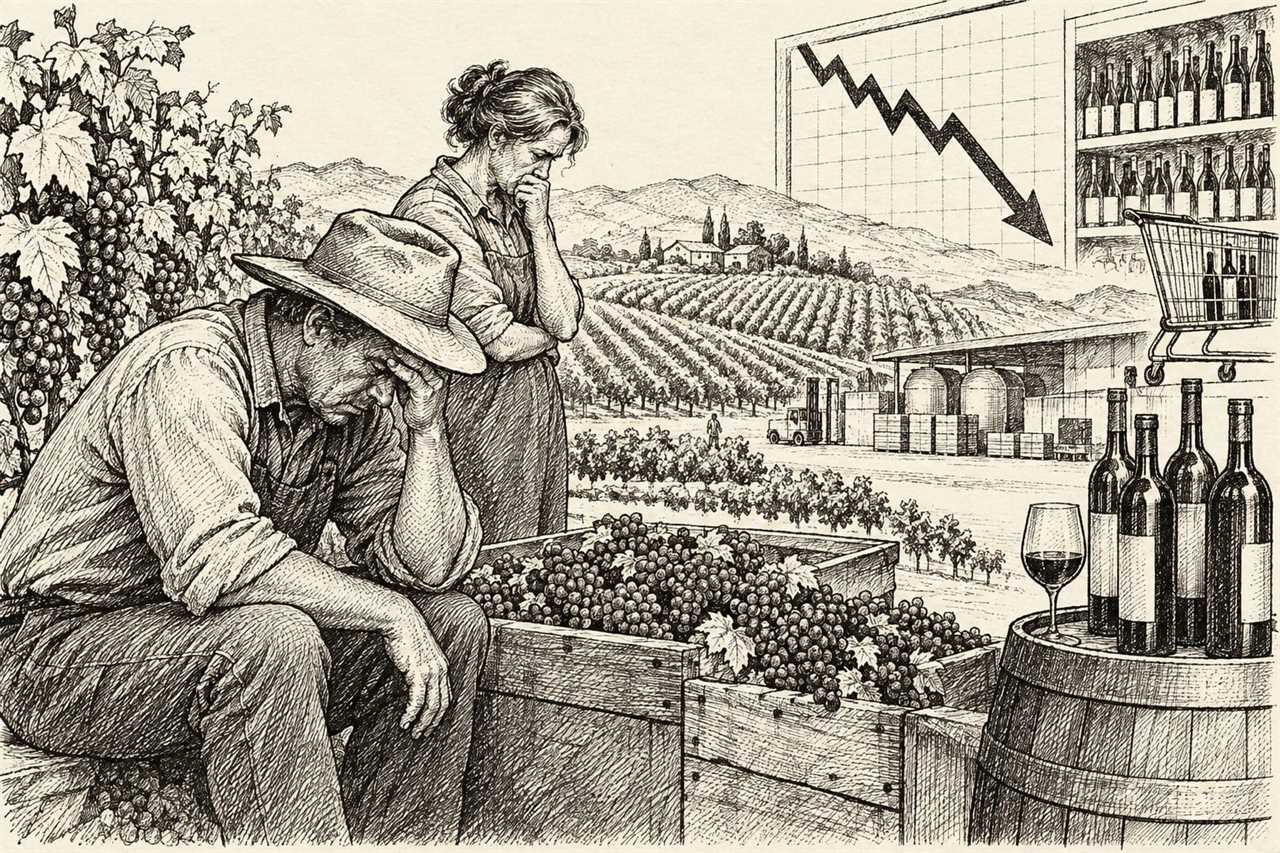
Grape harvest season is underway across California wine country, but many growers cannot find buyers for their crops as wine demand keeps falling. The drop has pushed some farmers to pull out vineyards their families have tended for generations, according to growers and industry representatives cited by KQED.
The shift matters to consumers and workers far beyond the vineyards. California produces more than 80% of the wine made in the United States, and the industry's troubles are already reaching farmworkers, local businesses and the price and availability of wine on store shelves.
Wine sales in the U.S. have dropped by more than 20% over the past five years. That decline has driven down the prices paid for grapes and led California growers to remove or stop farming roughly a quarter of the state's vineyard acreage. Farmers now face a choice between harvesting at a loss, leaving grapes to rot on the vine, or replacing vines with crops in higher demand, such as almonds, walnuts, pistachios and olives.
Bill Berryhill, a third-generation grower who owns Berryhill Family Vineyards near Lodi in the San Joaquin Valley, said he cannot find buyers for grapes grown on 200 of his 500 acres. He plans to pull out 50 acres once this year's harvest ends.
"It's just sickening," Berryhill said, standing among unsold merlot grapes. "You raise a beautiful crop, and it's really a nice vintage this year, and you drop it on the ground. It's sad. All your work is just down the toilet."
Berryhill, 68, said he expects to lose money again this year. "This has been a big loser for three years now," he said.
Vineyards Come Out of Production
California had nearly 600,000 acres of vineyards at its pandemic-era peak, according to Jeff Bitter, president of Allied Grape Growers, a group representing about 500 farmers statewide. Growers have since removed or stopped actively farming roughly 25% of that land.
This year, about half of California's wine grape crop went into harvest season without a buyer lined up, compared with 70% to 80% under contract in a typical year, Bitter said. Growers without contracts can sometimes sell their grapes at a loss to companies that turn them into concentrated syrup.
Bitter said too many grapes are still being grown even after large-scale vineyard removals. "The market is just so depressed that it's difficult to grow them profitably," he said. "Demand is not going up. It's still continuing to decline."
Kyle Collins, a Lodi-based operations manager with Allied Grape Growers, examined ripe petite verdot grapes in Lodi, one of the state's most productive wine regions, and said no buyer had come forward. "Unfortunately, we do not have a buyer for these grapes," he said. "That's unfortunately a reality for not just this vineyard but a lot of us around here."
Collins said the losses extend to farmworkers and the surrounding economy. "That's not getting into the pockets of the people doing the field labor, the farmworkers," he said. "It does have a trickle effect in the economy."
A Sharp Reversal After Years of Growth
For decades, California's wine industry expanded as Americans, especially baby boomers, developed a taste for cabernet, zinfandel and chardonnay. Napa and Sonoma Valley built reputations for premium wines while the Central Valley supplied grapes for cheaper labels.
Sales peaked in 2021, during the pandemic, when closed restaurants and limited gatherings pushed people to buy and drink more wine at home. Sales have fallen sharply since.
According to a report from First Citizens Bank, formerly Silicon Valley Bank, U.S. wine case sales dropped 23% between 2020 and 2025, from 427 million cases to 329 million. Total wine spending fell 22% over the same period, from $94 billion to $74 billion.
Bitter said California cannot simply export its surplus, because global wine consumption is also declining and production costs in the U.S. exceed those in countries such as Argentina and Australia. The International Organization of Vine and Wine reported that global wine consumption fell 2.7% from 2024 to 2025 and 14% since 2018, with steep drops in Europe and China.
Younger drinkers are turning away from alcohol for health and financial reasons, while wine competes with craft beer, liquor, canned cocktails and cannabis. "The kids just aren't drinking as much," Berryhill said. "And it's not just wine, it's whiskey and beer and everything. And then you've also got the competition with all the seltzers."
Tariffs have also cut into exports, particularly to Canada, previously the largest foreign buyer of American wine.
Rob McMillan, chief wine strategist at First Citizens Bank, said the industry must now match supply with demand and figure out what consumers actually want to drink.
Berryhill, whose grandfather began growing grapes nearly a century ago, said he intends to keep farming despite the losses. "I love growing grapes. It's in the blood," he said. "Because I love them, I can weather this and I'll fight through it."
The industry is watching for signs that the market has hit bottom, though no clear timeline has been given.